Dark spots can be incredibly frustrating, whether caused by sun exposure, acne, or hormones, they always seem to appear in the most inconvenient places. More and more people are turning to red light therapy as a gentle, natural way to even out their skin tone. But does it really work?
Note: The information below is not medical advice. This article is based on our own knowledge, user experiences, and various online sources.
Table of Contents

What are dark spots?
Dark spots form when your skin produces more melanin in certain areas than usual. Melanin is the pigment that gives color to your skin, hair, and eyes. When too much is produced, it leads to darker patches, from tiny freckles to larger areas of discoloration.
Different types
- Sun damage (solar lentigines): the well‑known “age spots,” caused by years of UV exposure.
- Post‑inflammatory hyperpigmentation (PIH): dark marks left after acne, wounds, or irritation.
- Melasma: hormonally driven pigmentation, often deeper in the skin and more difficult to treat.
- Freckles: genetically determined, usually lighter and more seasonal.
How does red light therapy work on dark spots?
Red light therapy uses wavelengths between 600–700 nm. These penetrate deeper into the skin than visible light and stimulate cellular processes. Here’s what happens:
- Boost in cellular energy: Mitochondria, the “powerhouses” of your cells, receive an energy boost, helping skin cells repair and renew more quickly.
- Reduced inflammation: Many dark spots are triggered by inflammation. Red light calms the skin, helping PIH fade faster.
- Regulation of excess melanin production: Research shows that red light can reduce the activity of tyrosinase, the enzyme responsible for melanin production. This helps slow the formation of new dark spots.
- Improved skin texture: Red light stimulates collagen, making the skin smoother and firmer, indirectly reducing the visibility of discoloration.
Good to know: red light works best on superficial pigmentation such as acne marks and sun damage. Deeper pigmentation, like melasma, responds less predictably.
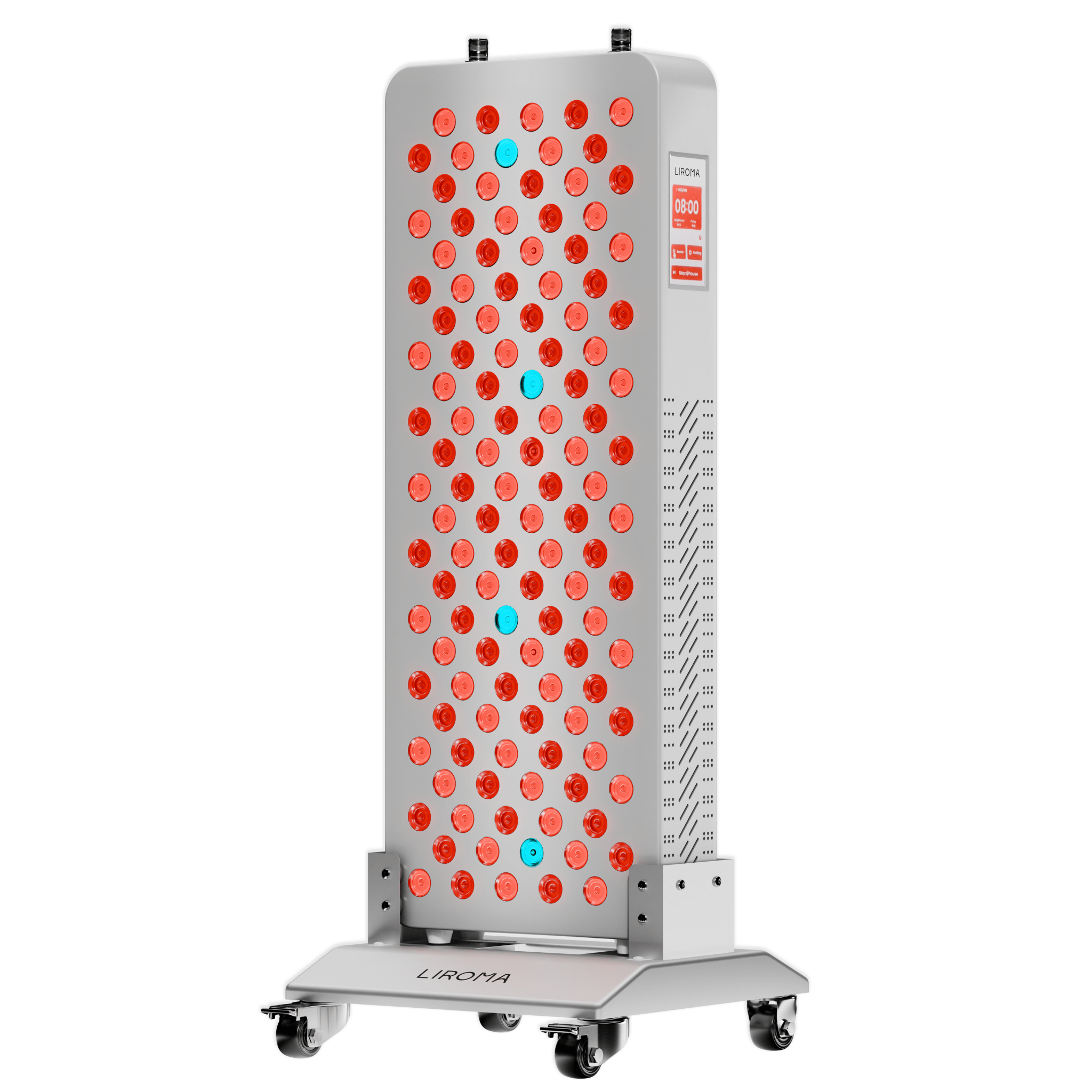
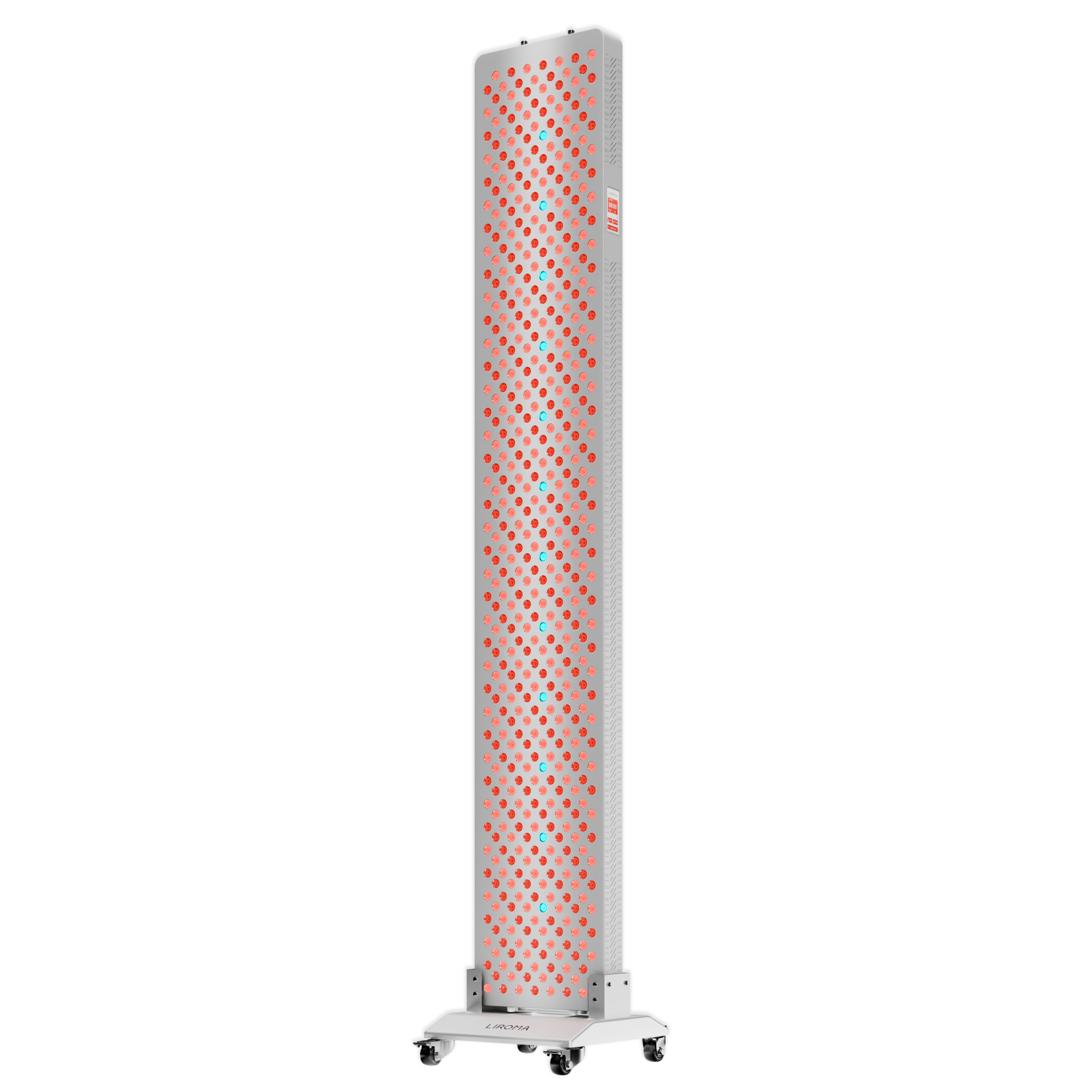
View all red light therapy panels

What does the science say?
Research on red light therapy is growing, although it’s not fully conclusive yet. Here’s what current studies suggest. Several NCBI‑published papers show that red light:
- Increases cellular energy and supports skin repair: Photobiomodulation studies show that red light activates mitochondria, boosting cell renewal (NCBI: PMC5988166, PMC4387504).
- Can reduce inflammation: Clinical reviews indicate that red light helps calm inflammatory processes in the skin (NCBI: PMC3423866).
- May influence tyrosinase activity: Research on light therapy and pigmentation regulation suggests red light may help reduce excessive melanin production (NCBI: PMC11202801).
- Supports skin structure and collagen: A widely cited study shows improvements in skin texture and firmness after red light therapy (PubMed: 28748217).

Tips for home use
Red light panels work best when used correctly and consistently. While settings vary per device, these are safe and commonly used guidelines:
- Distance: keep the panel about 10–30 cm from your skin.
- Duration: use it for 10–20 minutes per session.
- Frequency: 3–5 times per week works well for most people.
- Eye protection: always wear protective goggles, especially with powerful panels.
- Skin preparation: cleanse your skin beforehand and avoid SPF or active ingredients under the light.
- Consistency matters: results appear gradually, so sticking to your routine is key.
Conclusion
Red light therapy is a gentle, non‑invasive way to reduce dark spots. Superficial pigmentation, such as acne marks and sun damage, responds particularly well. While research is still evolving, current studies are promising and show that red light can support skin repair, even out the complexion, and strengthen the skin barrier.